
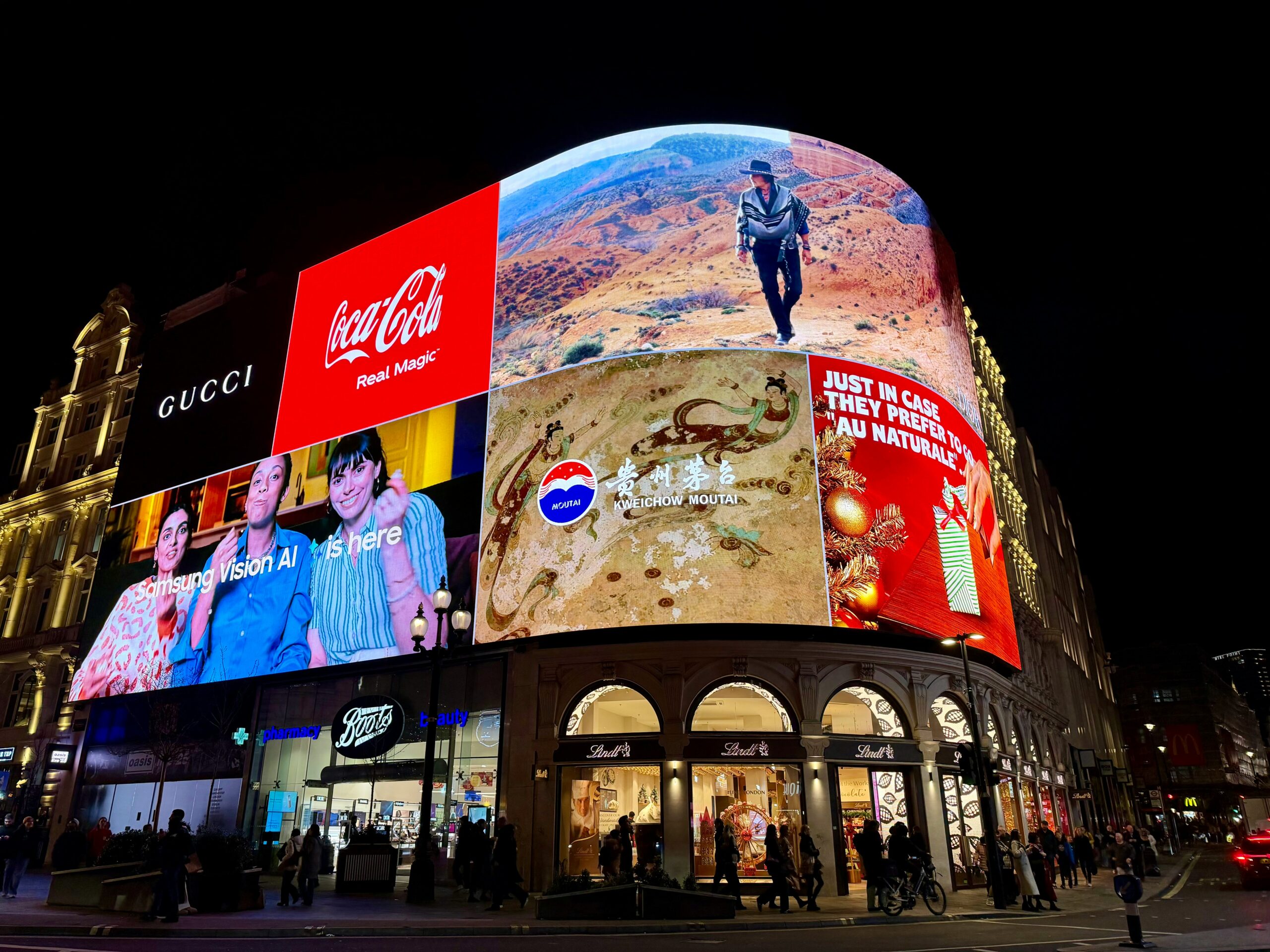
Logos look simple. A shape. A wordmark. A symbol. Sometimes just a color and a curve. Yet the strongest ones stop us mid-scroll, linger in memory, and surface again months later without effort. For design students, that effect can feel almost mystical. In reality, it is neurological.
The human brain processes visual information in roughly 13 milliseconds. That speed leaves no room for conscious evaluation. Logos that attract attention do so because they align with pre-attentive processing systems – the visual shortcuts wired into perception long before formal education begins.
Students analyzing brand identity often encounter dense cognitive science literature when exploring visual salience and memory encoding. In academic contexts, structured support such as a research paper writing service is sometimes referenced when organizing complex psychological findings into coherent arguments. Understanding attention requires clarity. So does explaining it.
Let’s unpack what the research actually shows.
Visual Salience And The Brain’s Shortcut System
Before meaning is interpreted, the brain filters stimuli for contrast, movement, and pattern disruption. This is known as pre-attentive processing.
Logos that stand out often leverage:
- High contrast color combinations
- Symmetry with slight asymmetrical tension
- Simple geometric structures
- Negative space manipulation
Functional MRI studies demonstrate that high-contrast visual stimuli activate the visual cortex more intensely than low-contrast designs. That activation does not guarantee preference, but it increases the probability of attention.
For design students, this means aesthetics are not arbitrary. They are neurologically strategic.
Color Psychology And Emotional Encoding
Color is not decoration. It is emotional shorthand.
Research in cognitive psychology indicates that color associations are learned culturally but processed automatically. Red often increases physiological arousal. Blue tends to signal stability and trust. Yellow triggers alertness but can fatigue quickly if overused.
Memory encoding improves when color contrast is paired with semantic consistency. For example, a brand promising environmental sustainability using neon magenta creates cognitive dissonance. The brain detects a mismatch.
Design students studying color theory often discover that emotional congruence enhances recall by up to 20 percent in controlled brand recognition tests.
Logos attract attention when visual signals align with narrative intent.
Shape Recognition And Evolutionary Bias
Humans are evolutionarily wired to detect certain shapes more quickly than others.
Circular forms tend to feel safer. Angular shapes signal caution or intensity. Research from visual cognition labs suggests that sharp angles trigger faster amygdala responses, a region associated with threat detection.
This does not mean angular logos are negative. It means they stimulate faster emotional processing.
Rounded logos often feel accessible. Geometric minimalism signals control and order. Irregular forms suggest creativity.
For design students, understanding these biases transforms logo creation from stylistic preference into perceptual engineering.
Simplicity And Cognitive Load
The most recognizable logos share one trait: simplicity.
Cognitive load theory explains why. The working memory can hold only a limited number of visual elements at once. Logos overloaded with gradients, intricate detail, or typographic complexity exceed this capacity.
Minimalist designs reduce processing time. They allow immediate pattern encoding. Studies in brand recall consistently show that logos with fewer than three primary elements achieve higher recognition rates across demographic groups.
Design is not about adding. It is about reducing.
Repetition, Exposure, And Learned Familiarity
Attention does not guarantee attachment. Familiarity builds attachment.
The mere exposure effect demonstrates that repeated exposure to a stimulus increases preference, even without conscious awareness. Logos become powerful not only because of design quality but also because of consistent placement and frequency.
Students exploring this phenomenon in academic settings sometimes consult a research paper writer when synthesizing behavioral studies into structured literature reviews. Exposure-based branding intersects with psychology, marketing, and neuroscience. The research landscape is layered.
What matters is this: attention can be engineered. Loyalty must be reinforced.
Cultural Learning And Symbolic Meaning
Not all logo impact is neurological. Much of it is learned.
Symbols acquire meaning through cultural repetition. A swoosh or bitten apple is not inherently powerful. It becomes powerful through narrative association.
For design students, this reinforces the importance of context. Logos do not exist in isolation. They exist within ecosystems of storytelling, advertising, and experience.
Annie Lambert, reflecting on analytical trends within the essay writing service industry, has noted that visual branding analysis increasingly appears in cross-disciplinary research, blending psychology, semiotics, and consumer behavior. The academic interest in logo cognition has expanded significantly over the past decade.
Logos attract attention not only because of form, but because of accumulated meaning.
Eye Tracking Studies And Visual Hierarchy
Eye-tracking research reveals how viewers scan logos in milliseconds.
Most observers follow an F-pattern or Z-pattern depending on the layout context. Central focal points with balanced whitespace perform better than cluttered compositions.
Design students who experiment with heatmap analysis tools often discover unexpected gaze behavior. Slight typographic shifts can redirect visual flow dramatically.
Understanding this allows for strategic hierarchy planning, ensuring brand name, symbol, and tagline compete appropriately rather than simultaneously.
When Research Meets Practice
Theoretical understanding must translate into application.
Midway through advanced design studies, students sometimes reference platforms like MyPaperHelp when organizing thesis-level explorations under guidance from a senior writer experienced in visual communication analysis. Complex projects often require structured feedback loops, particularly when integrating cognitive science into branding theory.
At the postgraduate level, topics such as perception bias and symbolic cognition frequently evolve into full-scale dissertation writing projects that explore visual salience across industries.
Research and design increasingly inform one another.
Attention Versus Memorability
It is important to distinguish between capturing attention and sustaining recall.
Attention is immediate. Memorability requires distinctiveness.
Distinctiveness arises from:
- Unexpected form
- Unique typographic treatment
- Strategic negative space
- Emotional resonance
However, too much novelty reduces clarity. The brain favors patterns it can categorize quickly.
Effective logos balance predictability and surprise.
Design As Applied Psychology
Logos attract attention because they are engineered for it. Through contrast, simplicity, shape bias, repetition, and emotional congruence, they align with cognitive architecture.
For design students, mastering logo creation requires more than aesthetic taste. It demands understanding perceptual science and behavioral conditioning.
The most effective logos do not shout. They resonate.
And resonance begins in the brain.