
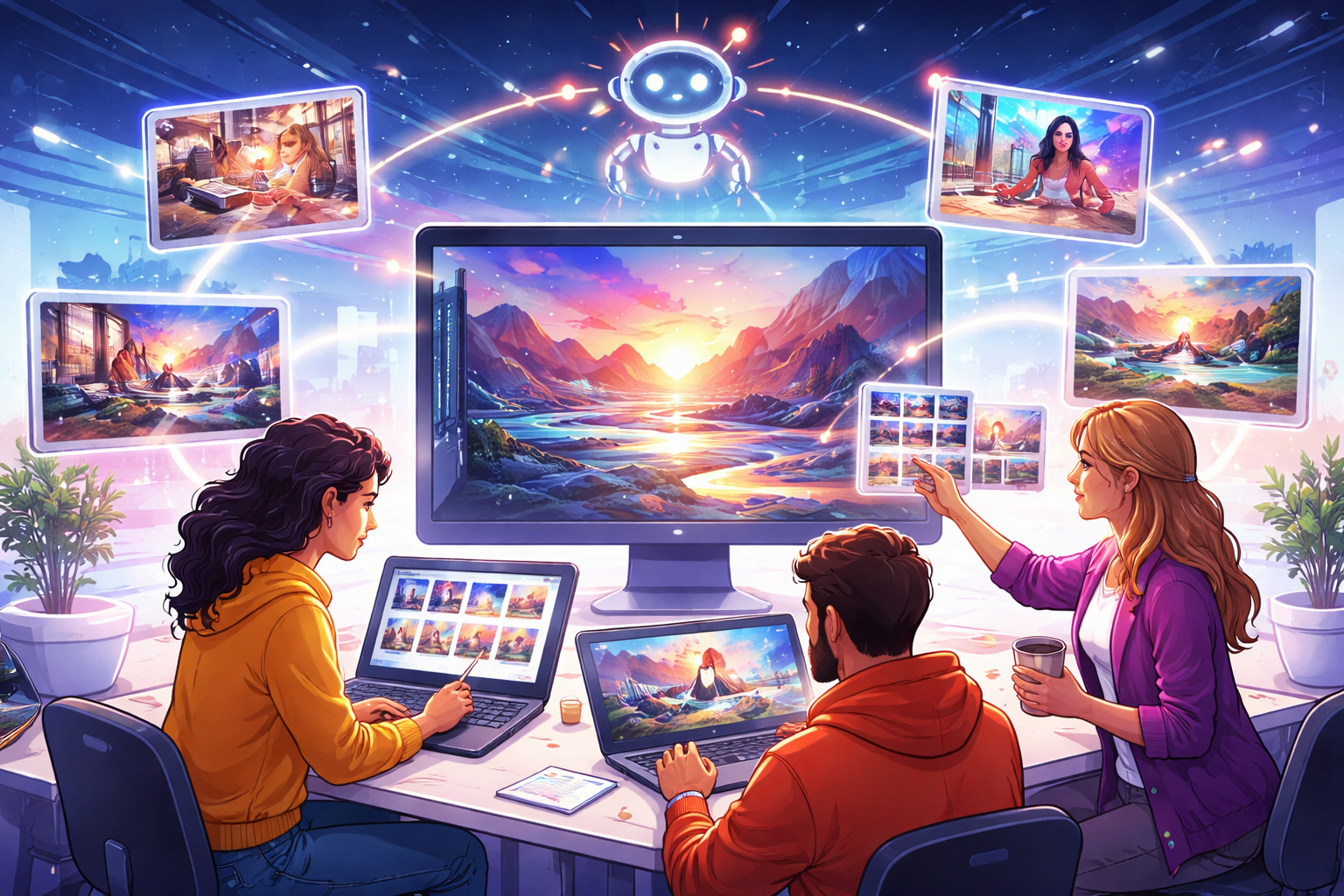
The design process usually needs to be fast and adaptive, such as when new project requirements come up or client feedback comes in. Creative teams are changing how they meet these challenges by moving to AI image generators. Their on-demand provision of new visuals helps speed workflows and minimizes the downtime in awaiting new concepts. Designers can now transition from idea to revision in record time with the aid of artificial intelligence within the creative cycle.
An AI Image Generator gives teams the ability to produce and refine visuals instantly, keeping projects moving without delay. Here is how these tools support faster design iterations across every stage of the creative process. Whether responding to feedback or exploring new concepts, speed and flexibility are at the core of each benefit.
Instant Visual Exploration
AI image generators help you to explore design options quickly. Rather than having to manually draw each idea or skim for stock images, teams can enter basic prompts and get dozens of iterations back in seconds. You receive immediate feedback, and this process speeds up ideation sessions. This frees up creative professionals to try out different styles, colors, or compositions without cost-prohibitive manual labor.In many modern workflows, rapid visual experimentation also connects with early branding decisions, where teams often explore tools like a logo maker to quickly visualize and refine brand identity concepts alongside design iterations. With quicker concept development, there is no blockage, so projects glide seamlessly from the earliest stage.Warm and regards
Responding Swiftly to Feedback
Visual assets are rarely finalized without amendments from clients or stakeholders. Conventional methods could take hours or even days to reproduce or adjust images. AI tools make these changes quicker by recreating the visuals and regenerating them almost within seconds. New prompts can be used to make updates like altering a background, colors, or details. This speed makes sure designs are iterated fast enough to stay in pace with project timelines and client expectations.
Reducing Creative Bottlenecks
One of the most common design bottlenecks is teams being unable to act until artwork revisions are made or struggling to envision new concepts. These lags can be eliminated with AI image generators. These tools automate the work of creating first drafts or alternative images, then allow different possibilities to be viewed together. This keeps momentum moving and minimizes downtime as teams can pick, mix, or refine these images. It streamlines the entire creative process and makes it productive.
Supporting Diverse Design Needs
New projects might expect resources in dozens of styles, arrangements, or themes. These requirements can easily be met by AI image generators. By just changing a few design prompts in the input, users can create images that match all aesthetics from clean branding to colorful editorial design. According to the U.S. Patent and Trademark Office, understanding intellectual property is important when creating original design assets. Such flexibility enables creative teams to fulfill diverse client or campaign requirements without taking the additional step of research or manual generation. When you have a few templates in place, consistency across deliverables only improves, even while variety jumps.
Facilitating Collaboration
Design has always been collaborative among teammates. AI-generated images can be instantly reviewed by the group. It makes giving feedback, proposing new directions, or voting on styles effortless for your colleagues in a single session. Being able to co-generate and review options helps to align visions and fast-tracks decisions. This shared access to new ideas and instant visual cues also enhances collaborative workflows.
Enabling Rapid Prototyping
Prototyping is a necessary step to test out ideas before mass production. AI image generators aid prototyping by providing images that can be used immediately for mockups, presentations, or user tests. By using generated images, designers can quickly put together dozens of prototypes, which can be evaluated and iterated upon faster. Potential problems are caught early, and new directions can be trialed on a large scale, but without the long delays. This rapid cycle of testing gives you better end products.
Maintaining Creative Energy
Working on the same piece over and over can kill off the initial fire of creation. AI image generators keep the process fresh by bringing in new ideas and replacing the boring repetitive functions. Now designers can dedicate that time where it is most effective, either polishing ideas or trying something new, as opposed to endless iterations. This fluid creative flow is what allows teams to still produce high-quality results within short deadlines.
Conclusion
AI image generators help you move from inspiration to implementation. By providing rapid visual choices, responding quickly to feedback, and promoting collaboration, they help reduce design cycles and increase output. These tools help creative professionals iterate quickly, power through project momentum, and feel confident responding to changing requirements. As artificial intelligence develops further, design iteration will become even more efficient and satisfying.