
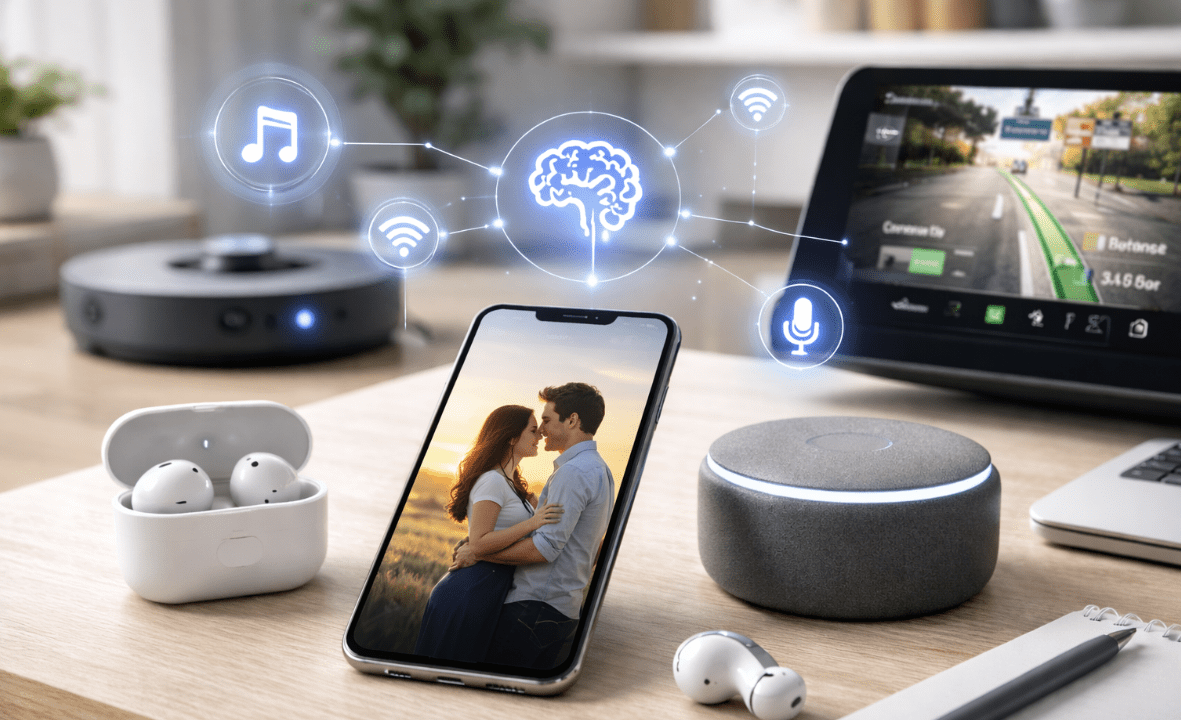
Imagine a typical moment during the day. You take a photo with your phone, and the image instantly looks brighter and sharper than what you actually saw. Your headphones automatically reduce the noise of a busy street. Your car suggests a faster route home because traffic is building on the highway. None of these things require special settings or technical knowledge. They simply happen in the background.
What many people don’t realize is that these everyday conveniences are powered by artificial intelligence. AI is no longer a futuristic technology used only in research labs. It has quietly become part of the devices people use every day — often without them even noticing.
How AI Quietly Entered Everyday Devices
Artificial intelligence didn’t suddenly appear in consumer technology. Its presence grew slowly, feature by feature. Early smartphones introduced voice assistants that could answer simple questions or set reminders. Soon after, cameras began using AI to recognize scenes such as sunsets, food, or portraits, automatically adjusting the image settings to produce better photos.
From there, the technology spread quickly. Devices began learning from patterns: how people use their phones, when they typically charge them, or which apps they open most frequently. Instead of waiting for instructions, devices started adapting automatically.
This gradual shift changed how technology works. Instead of requiring users to constantly adjust settings, devices now try to understand what the user needs and respond accordingly.
Where We Already See AI Every Day
Artificial intelligence may sound complex, but many of its most useful applications are surprisingly simple. In fact, people interact with AI dozens of times a day through devices they already own.
Smartphones
Smartphones are one of the most common places where AI operates quietly in the background. Cameras now use AI to detect lighting conditions, recognize faces, and improve image quality automatically. Battery systems analyze how people use their phones and adjust power usage to extend battery life.
Voice assistants also rely on AI to recognize speech patterns and respond to commands more naturally than earlier technologies could.
Headphones and Audio Devices
Modern wireless headphones use AI to analyze surrounding noise and adjust noise cancellation in real time. When you step onto a noisy subway platform, the headphones reduce background sound. When you start talking to someone nearby, some models automatically lower the audio so you can hear the conversation.
These small adjustments make devices feel smarter without requiring any manual configuration.
Cars
AI has become increasingly common in modern vehicles. Many cars now include systems that monitor traffic patterns, recommend alternative routes, or assist with parking. Advanced driver-assistance systems can even detect obstacles and warn drivers about potential hazards.
While these systems don’t replace drivers, they provide an additional layer of awareness that helps make driving safer and more convenient.
Home Devices
Artificial intelligence has also reached everyday household technology. Robot vacuum cleaners map rooms and learn the layout of homes so they can clean more efficiently over time. Smart thermostats observe daily routines and adjust heating or cooling automatically.
Even kitchen appliances are beginning to incorporate AI, helping people track food expiration dates or suggesting recipes based on ingredients in the fridge.
Why Manufacturers Are Adding AI Everywhere
There are several reasons why AI has become such a common feature in modern devices.
First, competition between technology companies is intense. Every new generation of products needs to offer improvements that make devices feel more capable and intelligent. AI allows manufacturers to introduce features that feel advanced while still being practical for everyday use.
Second, AI helps automate tasks that previously required manual effort. Instead of adjusting camera settings, choosing audio profiles, or optimizing battery usage, devices can make these decisions automatically.
Third, artificial intelligence allows devices to become more personalized. By analyzing how people interact with their technology, devices can adapt to individual habits and preferences, creating a more comfortable and intuitive experience.
The Role of AI in the Growing World of Online Shopping
Another area where intelligent systems are becoming increasingly important is online shopping and delivery logistics. As more people buy products online, keeping track of multiple deliveries has become part of everyday life.
Instead of checking several shipping websites manually, tools like the TrackingPackage package tracking tool help users quickly see where their shipments are and when they are expected to arrive. Services like this demonstrate how digital systems can simplify small but frequent tasks, making everyday processes easier to manage.
Just like AI-powered devices automate camera settings or navigation routes, modern digital tools help organize information that people would otherwise need to track manually.
When AI Is Truly Useful — and When It’s Just Marketing
Despite its growing presence, not every feature labeled as AI represents a major technological breakthrough. Sometimes the term is used more as a marketing phrase than as a meaningful improvement.
However, in many cases AI genuinely improves how devices function. Automatic photo enhancements, adaptive noise cancellation, predictive text, and navigation suggestions all rely on machine learning systems that process large amounts of data quickly.
The key difference between useful AI and marketing hype is simple: useful AI removes friction from everyday tasks without requiring extra effort from the user.
The Quiet Intelligence Behind Modern Devices
Artificial intelligence is unlikely to replace human decision-making in most everyday devices, but that was never really the goal. Instead, AI helps technology become more responsive and easier to use.
What makes this transformation interesting is how subtle it often feels. Devices don’t announce that they are using artificial intelligence. They simply work a little better, adapt a little faster, and require fewer adjustments.
In many ways, AI is becoming a background technology — something that quietly supports everyday tools rather than drawing attention to itself. And as devices continue to evolve, that quiet intelligence will likely become an even more natural part of daily life.