

Artificial Intelligence (AI) has rapidly become an indispensable asset for brands seeking to innovate and optimize their identity and engagement strategies.
How AI tools are transforming branding is no longer a futuristic concept but a present-day reality shaping the way companies connect with consumers — from designing logos to delivering personalized content experiences.
This article explores these transformations in depth, offering actionable insights and compelling real-world examples.
How AI Is Redefining Brand Experiences
AI doesn’t just enhance one aspect of branding — it touches every layer of how brands express, communicate, and adapt. By analyzing data, generating visuals, and personalizing interactions, AI helps brands move from static identities to dynamic, evolving experiences.
The following sections explore how these transformations take shape in design, communication, and customer engagement.
1. AI-Powered Logo Creation: Reinventing Brand Identity
The logo remains the cornerstone of brand identity, and AI has revolutionized how logos are created, refined, and deployed. Traditionally, logo creation was a time-consuming process involving designers and multiple rounds of feedback.
Now, AI tools accelerate this by generating numerous logo variations quickly, enabling brands to experiment with styles, colors, and symbols until the perfect representation is found.
How AI Enhances Logo Design
- Speed and Efficiency: AI algorithms can produce hundreds of logo concepts in minutes based on brand input parameters such as industry, values, and color preferences.
- Data-Driven Inspiration: Machine learning analyzes trends and competitor logos to suggest designs that resonate within a target market.
- Customization at Scale: AI allows for the easy tweaking of shapes and typography, ensuring every logo reflects a unique brand personality.
For those interested in exploring current trends in AI-assisted logo design, the World Vector Logo blog offers in-depth articles such as Logo Design Trends for 2025 and Storytelling Through Logo Design, which showcase how AI influences modern branding aesthetics.
Moreover, brands embracing AI-generated logos reflect an understanding of adaptability and innovation — essentials in today’s dynamic market. AI also enables the iterative testing of logos for impact and memorability before launch.
2. Personalization at Scale: AI’s Role in Customer Engagement
Personalization has become one of the most effective ways for brands to connect with people on an individual level. Instead of sending broad marketing messages, AI helps brands create experiences that reflect real-time customer data, including past purchases, browsing habits, demographics, and sentiment.
Machine learning systems process large amounts of data to predict customer needs, suggest products, and adjust messages so they match each person’s interests. This approach not only increases engagement but also builds long-term loyalty, as customers feel recognized and appreciated throughout their journey.
Examples of AI-Driven Brand Personalization
| Brand | AI Application | Impact |
| Heinz | AI-generated personalized ketchup packaging designed by users | 1.15 billion impressions; major increase in brand engagement; positioned as AI innovation leader |
| Nutella | AI algorithms created 7 million unique jar labels for the Nutella Unica campaign | Boosted sales; collectible jars enhanced brand affinity and user-generated content; playful brand repositioning |
| Sephora | Virtual Artist AR makeup try-on tool powered by AI | Transformed beauty shopping; improved customer experience; increased online sales; rich data for personalized marketing |
These examples showcase how how AI tools are transforming branding by creating meaningful, customized interactions that differentiate brands in competitive markets.
3. Content Consistency and Brand Voice through AI
Maintaining a consistent brand message across channels and touchpoints is a persistent challenge. AI tools offer solutions that help brands preserve content consistency while scaling their content marketing efforts.
AI-Driven Content Generation and SEO Optimization
Platforms like SEO Writing AI leverage AI to automate the generation of articles, blog posts, and marketing copy optimized for search engines. By automating keyword research and content outlines, brands can produce SEO-friendly content more efficiently, enhancing their digital presence.
Humanizing AI Content
One pitfall of AI-generated content is the risk of robotic or generic tone, potentially diluting the authenticity of a brand’s voice. Tools such as Siteefy’s AI Humanizer help transform AI-written copy into natural, human-like prose that flows smoothly and feels engaging, preserving brand authenticity.
Ensuring Content Originality
Brands must also ensure that their AI-assisted content remains genuine and not overly mechanized to preserve trust with their audience. To verify authenticity, brands can use an AI detector like ZeroGPT, which analyzes text and identifies whether it’s likely AI-generated. This helps maintain trust by avoiding content that feels automated or unnatural.
4. Predictive Insights and Brand Strategy Optimization
Beyond design and communication, AI is transforming the strategic side of branding — helping companies anticipate trends, analyze consumer sentiment, and refine brand positioning with data-driven precision.
Traditionally, market research relied on surveys and focus groups that offered limited insights and slow feedback loops. Today, AI enables brands to gather real-time intelligence and adjust strategies dynamically based on predictive analytics.
How AI Strengthens Brand Strategy
Trend Forecasting: AI tools continuously analyze search behavior, social media conversations, and digital interactions to identify early signals of emerging market trends. This allows brands to align their messaging, visuals, and campaigns with evolving consumer interests before competitors catch up.
Consumer Sentiment Analysis: Platforms such as Brandwatch or Sprout Social process millions of online mentions to gauge public perception. Brands use this data to understand how audiences feel about their identity, tone, or campaigns — and to adapt instantly when sentiment shifts.
Performance Prediction: Machine learning models can estimate how well a new campaign, logo, or content piece might perform before launch. This enables more informed decision-making, reducing marketing risks and optimizing creative investments.
Example Applications
- Nike leverages predictive analytics to forecast demand for new product lines and align branding messages with seasonal or regional preferences.
- Coca-Cola uses AI sentiment tracking to measure the emotional response to its global campaigns in real time, fine-tuning creative assets accordingly.
- Smaller brands use accessible AI analytics dashboards to understand audience behavior, set benchmarks, and refine their brand story with measurable accuracy.
By adding this strategic layer, AI helps brands move beyond intuition — turning branding into a continuous learning process fueled by predictive insights and measurable outcomes.
AI Tools Assisting Early-Stage Branding Decisions
Brand development begins with foundational choices such as selecting a name and securing a matching domain. Finding a unique and available domain can be challenging, especially when many short and memorable options are already taken.
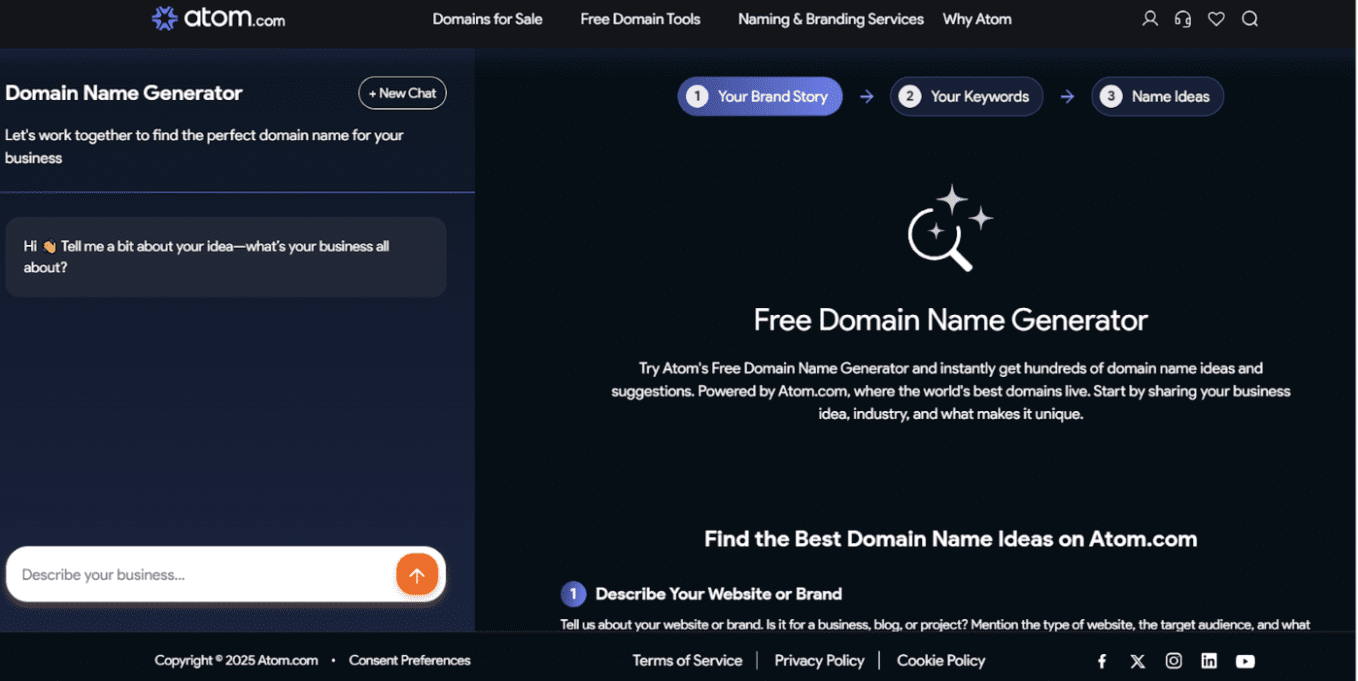
Some tools now use AI to simplify this step. They analyze keywords, context, and language patterns to suggest names that sound relevant and easy to remember. For example, Atom’s Domain Name Generator uses AI to create domain name ideas, checking their availability instantly and helping users find brandable options that fit their goals.
Future Trends: The Growing Integration of AI in Branding
Looking ahead, AI will continue to push the boundaries of branding by integrating more immersive technologies such as augmented reality (AR) and advanced machine learning analytical tools that deepen understanding of consumer behavior.
Brands adopting AI early gain competitive advantages, becoming more agile, data-driven, and customer-centric in their approach. For ongoing insights into AI’s role in branding and design innovation, the curated collections of logos tagged with AI, tools, and machine learning at World Vector Logo, tools, and machine learning provide valuable case studies and inspiration.
Conclusion
In summary, how AI tools are transforming branding encompasses rapid, creative logo generation, enhanced content consistency, personalized consumer engagement, and foundational brand-building assistance such as domain name generation. Brands like Heinz, Nutella, and Sephora demonstrate AI’s potential to amplify engagement and distinctiveness.
While AI accelerates and scales branding efforts, preserving authenticity and ethical use through tools like ZeroGPT and Siteefy’s AI Humanizer remains critical for genuine connections. Embracing AI thoughtfully will empower brands to stand out in an increasingly competitive marketplace.