Firmness disagreements are one of the most common friction points couples run into when shopping for a mattress together. One partner wants something plush enough to sink into, the other wants a surface firm enough to feel supported without any noticeable give. A king mattress doesn’t automatically solve this disagreement, but the extra width does change how much that mismatch actually matters night to night.
Rather than walking through this topic as a straightforward buying guide, it helps to answer the specific questions couples in this exact situation tend to ask once they start comparing options. Below are the ones that come up most often.
Does a Firm Mattress Feel the Same for Both Partners on a King?
Not necessarily. Firmness perception depends heavily on body weight, so a mattress that feels appropriately firm to a lighter partner can feel noticeably softer to a heavier one lying on the exact same surface. This is true regardless of mattress size, but it becomes more relevant on a king specifically because the extra width sometimes tempts couples into assuming a single firmness choice will simply work itself out given more space.
It doesn’t automatically work itself out. A heavier partner will still compress the same foam more deeply than a lighter one, meaning firmness needs to be evaluated with both people’s weight in mind rather than assuming a king’s added space neutralizes the difference on its own.
Can One Partner Compensate With a Mattress Topper?
This is one of the more practical workarounds couples use when a shared firm mattress feels right for one partner but too firm for the other. A topper added to just one side of the bed can soften that half without affecting the overall support the other partner relies on, provided the topper is sized and positioned correctly.
The tradeoff is that toppers add an extra layer to manage, both practically and in terms of fitted sheets no longer sitting flush, and they don’t fully replicate the feel of a mattress genuinely built with a softer comfort layer from the start. For minor mismatches, a topper is a reasonable fix. For larger firmness gaps, it tends to be a partial solution at best.
Is a Split Firmness King Mattress Worth Considering?
Split configurations, where each half of the mattress uses a different firmness level, exist specifically for couples dealing with this kind of disagreement. They tend to work best when the firmness gap between partners is significant rather than minor, since a slight preference difference usually doesn’t justify the added cost and complexity of sourcing or maintaining two separate halves.
Couples considering this route should also think about how it affects future flexibility. A split king locks in two specific firmness choices, which can become a problem if either partner’s preference changes over time, whereas a single firm mattress leaves more room for both partners to adjust their expectations together as needed.
Does a Firm Mattress Actually Suit Most Sleep Positions?
Firm mattresses tend to work best for back and stomach sleepers, since the reduced sinkage helps prevent the lower back from dropping out of alignment. Side sleepers generally fare worse on very firm surfaces, since insufficient cushioning at the shoulder and hip can create pressure points that firmness alone doesn’t relieve.
If one partner sleeps primarily on their side while the other favors their back, a firm mattress may end up suiting one person’s needs far better than the other’s, independent of personal firmness preference entirely. This is worth factoring in alongside stated preference, since sleep position sometimes matters more than which firmness level someone says they like.
How Much Does Motion Isolation Matter When Firmness Differs?
Quite a bit, particularly if one partner tends to move more during the night. Firmer mattresses generally transfer less motion than very soft ones, since there’s less material compressing and rebounding with each shift in position. This can actually work in favor of couples with firmness disagreements, since the partner who prefers softness still benefits from reduced disruption even if the overall surface feels firmer than they’d ideally choose on their own.
This is one of the underappreciated tradeoffs worth mentioning to a partner who’s hesitant about a firmer shared mattress. The added stability often improves sleep quality in ways that firmness preference alone doesn’t fully predict.
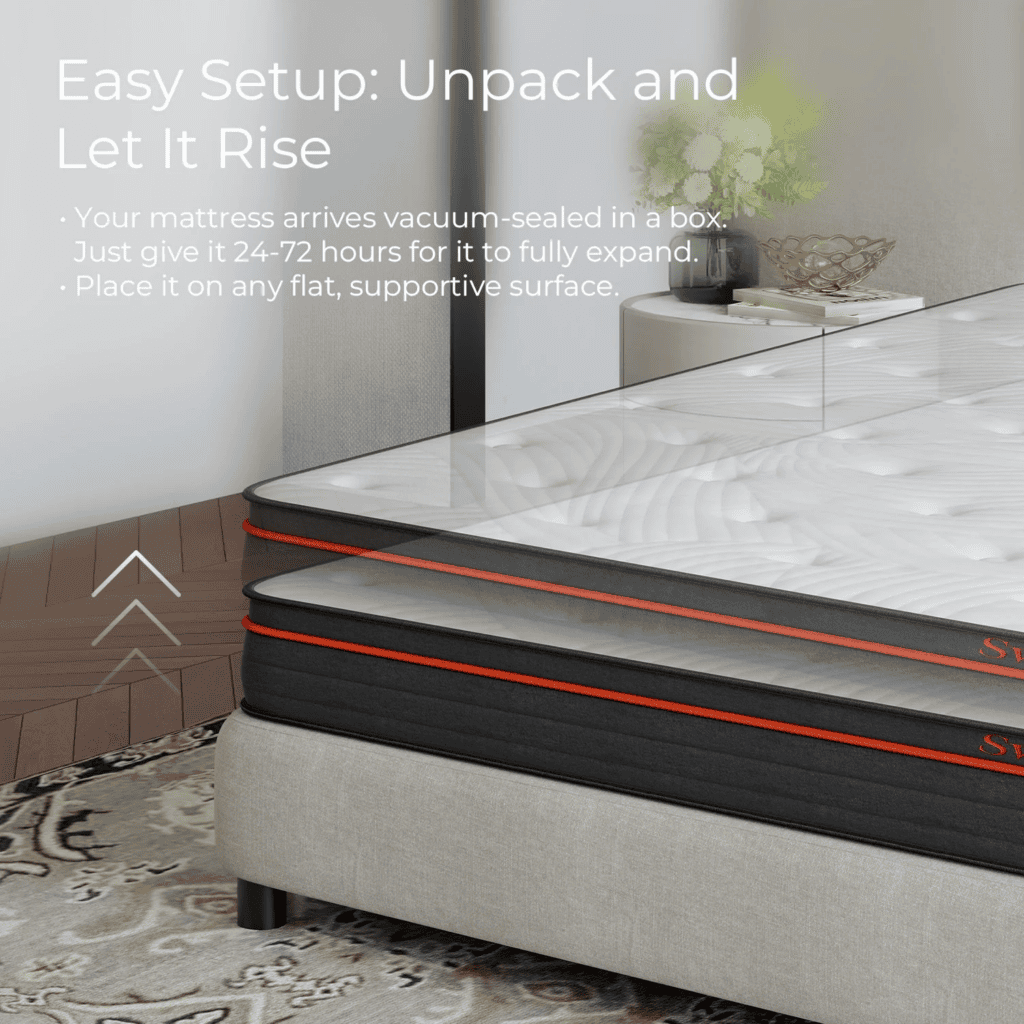
The Twilight Hybrid Mattress offers a useful middle ground for couples navigating exactly this kind of disagreement. Its medium firmness level, supported by a Dynamic Coil system and reinforced edge support, provides enough structure for back and stomach sleepers while still including layered comfort foam that softens the experience for side sleepers who need more cushioning. Available in king along with other standard sizes, it comes with a 100-night trial and a 10-year warranty, giving couples real time to determine whether a shared firmness level works for both of them before making a final decision.
What Happens If the Disagreement Doesn’t Resolve?
Sometimes a couple tries a shared firm mattress, gives it a genuine trial period, and still finds the mismatch too significant to ignore. In these cases, it’s worth revisiting either a split configuration or a topper-based compromise rather than continuing to force a single firmness choice that’s clearly working better for one partner than the other.
It’s also worth remembering that firmness preference isn’t necessarily fixed. Some people adjust to a firmer surface over several weeks as their body gets used to less sinkage, particularly if they were previously sleeping on an overly soft, unsupportive mattress. Giving the adjustment period its full length before deciding the disagreement is unresolvable tends to prevent premature conclusions.
Where Should a Couple Start Looking?
For couples specifically seeking a firmer option that still accommodates some flexibility for differing preferences, starting with the best firm mattress category tends to surface options built with this exact tension in mind, rather than mattresses designed around a single firmness philosophy without much consideration for shared use. Comparing a handful of these options together, ideally testing in person when possible, remains the most reliable way to find a firmness level that neither partner feels is working against them.
Is It Worth Trying Before Both Partners Fully Agree?
In most cases, yes, provided the trial period is genuinely risk-free. Couples sometimes wait for complete agreement before purchasing anything, which can stall the decision indefinitely if two people simply have different baseline preferences that were never going to align perfectly on paper. A mattress that both partners are cautiously willing to try, backed by a full trial period, often reveals more about actual comfort than another few weeks of debating hypothetical firmness levels.
What’s the Biggest Mistake Couples Make in This Situation?
The most common mistake is choosing based on whoever feels more strongly about their preference, rather than considering both partners’ sleep positions, body weight, and how much motion isolation actually matters for their specific sleep patterns. A firmness decision made this way often satisfies one partner immediately while quietly leaving the other adjusting to discomfort for months. Working through the full picture together, rather than settling the disagreement through compromise alone, tends to produce a choice that holds up much better over time.