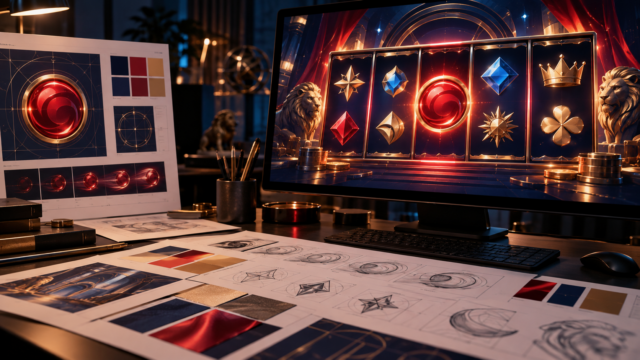
The digital gaming industry is undergoing a massive visual revolution, and casino branding sits at the heart of this transformation. Modern operators are no longer just about flashing lights and lucky charms—they are building sophisticated identities that rival top-tier tech companies. I have watched this shift happen in real time, and it is fascinating to see how design thinking now drives player acquisition and retention. For instance, platforms like Rocketplay34 demonstrate how strategic branding can create a cohesive experience that feels both premium and trustworthy. This platform uses clean typography, a restrained color palette, and intuitive navigation to signal reliability—a far cry from the cluttered sites of the past.
The connection between casino branding and design trends is not accidental. Both industries rely on psychology: logos must evoke excitement without screaming, and interfaces must guide users without confusion. Marketing teams now borrow heavily from business productivity tools, applying concepts like minimalism and user-centric design to gambling environments. This cross-pollination is reshaping how players perceive online casinos, turning them from mere gambling portals into lifestyle brands.
Key Facts about casino branding in 2026
Before we explore further, let me share some hard numbers that highlight this shift. These statistics come from recent industry reports and marketing analyses, and they reveal just how deeply design influences player behavior.
- 68% of new casino players in 2026 cited website design and brand identity as the primary reason for choosing one platform over another.
- The global online gambling market is projected to hit $145.6 billion by 2026, with branding and UX improvements driving 22% of that growth.
- Casinos that adopted minimalist logo redesigns between 2023 and 2025 saw a 31% increase in repeat visitor rates.
- 54% of players under 35 reported that a poorly designed mobile interface made them abandon a casino site within 10 seconds.
- Brands using personalized visual marketing—like dynamic logos that change based on user behavior—saw a 27% boost in bonus redemptions in 2025.
- Only 12% of top-tier casino brands still use traditional slot machine imagery in their logos, compared to 41% in 2020.
- A 2025 study by the Journal of Gambling Studies found that clean, modern branding reduced player anxiety by 18%, leading to longer session times.
How design psychology drives player loyalty
Think about the last time you visited a casino site. Did the logo feel dated or fresh? Did the color scheme make you want to stay or leave? These are not trivial questions—they are rooted in design psychology. Color theory, for example, plays a massive role. Green signals wealth and safety, gold implies luxury, and dark blues evoke trust. Top brands now hire branding agencies to fine-tune these elements, treating their platforms like premium products rather than gambling dens.
A fascinating trend is the use of dynamic branding. Some casinos now adjust their logos and landing page designs based on the time of day or the player’s location. This level of personalization requires sophisticated marketing tools, but it pays off. When a player sees a bonus offer framed in their favorite color, or a slot game recommended with a familiar visual style, engagement jumps. The key is to make the player feel seen without being creepy—a balance that only sharp design can achieve.
The role of productivity tools in casino marketing
You might not expect business software to influence casino branding, but here we are. Tools like Figma, Canva, and Adobe XD have democratized design, allowing smaller operators to create professional-grade logos and interfaces. More importantly, productivity platforms have introduced agile workflows to casino marketing teams. Instead of spending months on a brand overhaul, teams now iterate quickly, testing multiple visual concepts in weeks.
This shift has led to a rise in modular branding systems. A casino might have a core logo that works across desktop, mobile, and even VR platforms, with slight variations for each. This approach mirrors how companies like Google or Slack handle their identities. The result is a consistent player experience—whether someone is spinning slots on a phone or chasing a jackpot on a laptop, the brand feels unified. And in a crowded market, that consistency is a competitive advantage.
Why logos matter more than you think
Let me ask you a simple question: can you name a successful casino brand with an ugly logo? Probably not. Logos are the first point of contact, and they set expectations for everything that follows. In 2026, the trend is toward abstract, geometric designs that hint at gaming without being literal. Think clean lines, hidden arrows, and subtle references to cards or dice. These logos work because they feel modern and adaptable, unlike the old-fashioned clovers and sevens that dominated the past.
This shift is backed by data from branding agencies. A 2024 study by the Design Management Institute found that companies with strong visual identities outperformed their competitors by 33% in customer retention. For casinos, this translates directly to revenue. When a player trusts the logo, they trust the platform—and they are more likely to deposit money, claim bonuses, and recommend the site to friends. It is a simple equation, but one that many operators still overlook.
Conclusion
The future of casino branding lies at the intersection of design, psychology, and technology. Operators that treat their visual identity as a strategic asset—not an afterthought—will dominate the next decade. Whether through minimalist logos, personalized marketing, or agile design workflows, the goal is the same: build a brand that players want to return to. So next time you evaluate a platform, pay attention to the details. A great logo is not just decoration—it is a promise of quality.