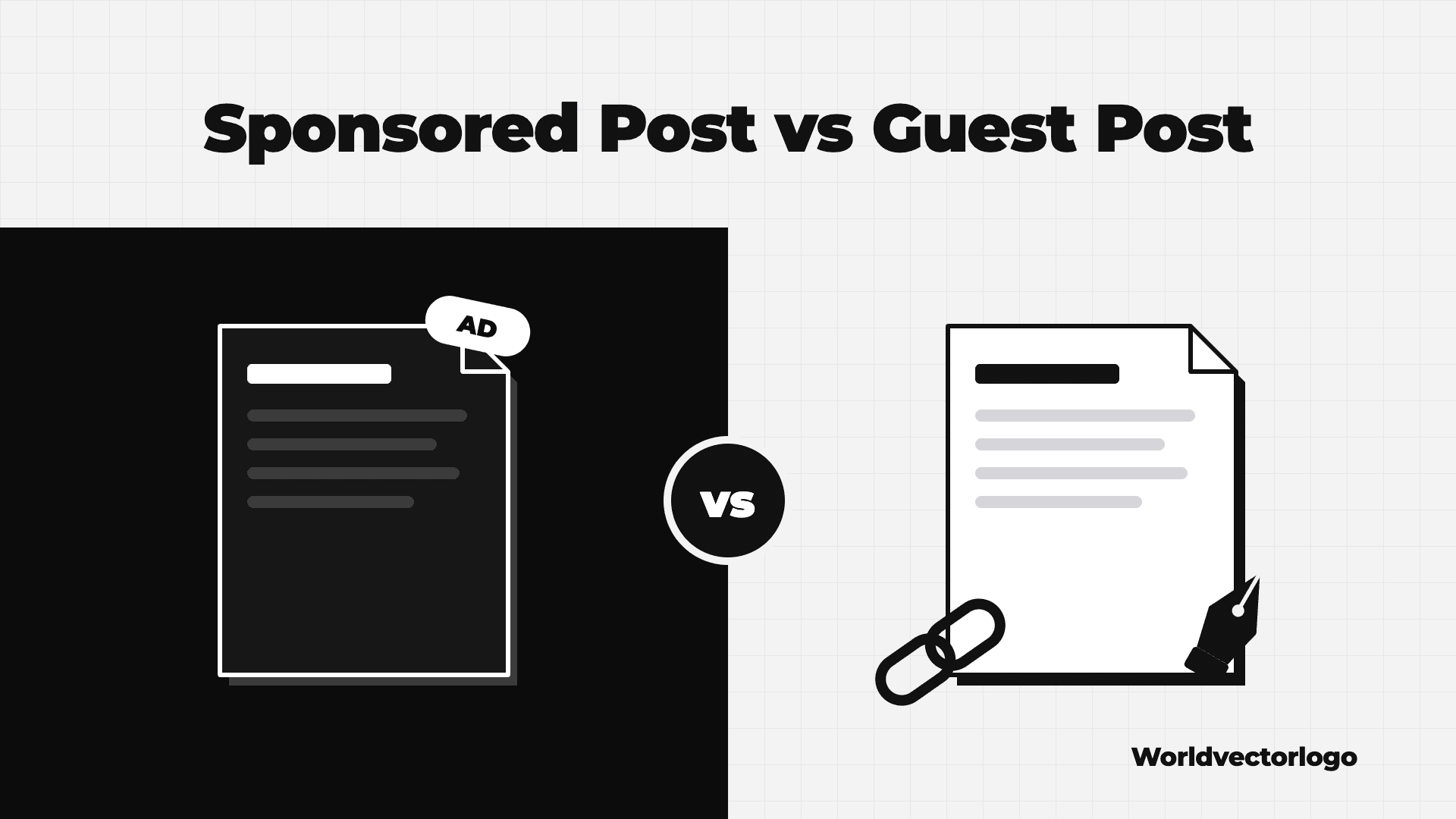
A sponsored post is content a brand pays for, and it is labeled as paid. A guest post is an article written by an outside author and published on someone else’s site. A guest post can be free or paid. Once money changes hands, Google treats the links as paid links and asks for rel=”sponsored”.
This post is published by Worldvectorlogo. We sell both sponsored posts and contributor guest posts, and we use our own products as the example. We checked Google’s guidance on Google Search Central on October 31, 2026.
At a Glance
| Point | Sponsored Post | Guest Post |
|---|---|---|
| Who writes it | The brand, or the publisher for the brand | An outside author, often an expert or brand |
| Is it paid? | Always | Sometimes. Many sites only accept free posts. Others charge. |
| Label | Marked as sponsored or paid | Usually shown under the author’s byline |
| Link attribute Google asks for | rel=”sponsored” (or nofollow) | None if truly free and editorial; rel=”sponsored” if paid |
| Main goal | Reach and brand exposure | Expertise, reach and author credit |
| Worldvectorlogo example | Sponsored Guest Post, $499, link tagged sponsored | Organic / Contributor Article, $699, homepage feature |
1. What Is a Sponsored Post?
A sponsored post is paid content. A brand pays a site to publish an article about its product, topic or offer. The site tells readers the post is sponsored. The links in it are marked as paid.
- The brand pays a fixed fee.
- The post carries a sponsored label or disclosure.
- Links use rel=”sponsored”, so search engines know they are paid.
- The value comes from readers who see the post and click.
Sponsored posts are one form of native advertising. For a look at how they compare with banner ads, read sponsored posts vs display ads.
2. What Is a Guest Post?
A guest post is an article by someone who does not work for the site. The author pitches a topic, writes the piece and gets a byline. Most guest posts include an author bio with a link.
- Some sites accept guest posts for free, if the article is good enough.
- Many sites now charge a fee to publish a guest post.
- The post looks like normal editorial content.
- The author gains exposure and credit with a new audience.
A paid guest post and a sponsored post can look alike. The main difference is how the post is framed: as a contributor article or as a paid promotion. Prices vary a lot. See our guest post cost comparison.
3. What Google Says About Paid Links
Google’s guide to qualifying outbound links lists three rel values. It says to mark links that are advertisements or paid placements with rel=”sponsored”. It says nofollow was recommended before and is still acceptable, but sponsored is preferred.
Google’s spam policies go further. They list “buying or selling links for ranking purposes” as link spam. That includes paid articles with links that pass ranking credit, and that covers guest posts. The same page says buying and selling links for advertising is normal, as long as the links use nofollow or sponsored.
- Paid link? Google asks for rel=”sponsored” or rel=”nofollow”.
- This applies whatever the package is called, sponsored post or guest post.
- A free, editorial guest post with a natural link does not need a rel value.
So the label on the package does not decide Google’s view. Payment does.
4. Our Two Options as an Example
Worldvectorlogo sells both formats. Our site gets 750K+ monthly visitors from 70+ countries. Readers are designers, developers, marketers, agencies and startups.
| Detail | Sponsored Guest Post | Organic / Contributor Article |
|---|---|---|
| Price | $499 | $699 |
| Format | Sponsored post, link tagged sponsored | Contributor article |
| Links | Up to 2 | Up to 2 do-follow links |
| Extra exposure | Permanent placement | Homepage feature on Worldvectorlogo.com |
| Live | Within 24 hours after approval | Within 24 hours after approval |
Our Sponsored Guest Post follows Google’s guidance as written: the link is tagged sponsored. The Contributor Article reads like a normal editorial piece and adds a homepage feature. It is still a paid placement. If following Google’s paid link guidance matters most to you, choose the sponsored option.
Both options include permanent placement. Writing costs +$249 if you need it. We only sell paid placements. We do not accept free guest posts or link exchanges.
How to Choose
- Pick sponsored if search rules come first. A tagged link follows Google’s paid link guidance.
- Pick a contributor article for reach and format. It reads like editorial content and can get a homepage feature.
- Check the site, not just the label. Real readers matter more than the format. Use our checklist for guest post sites.
- Compare services. See our list of the best guest posting services if you need many sites.
FAQ
Is a Paid Guest Post the Same as a Sponsored Post?
In Google’s view, both are paid placements. The difference is the format and label. A sponsored post is marked as paid. A paid guest post looks like a contributor article.
Do Sponsored Links Help SEO?
A sponsored link tells Google not to count it as an editorial vote. It can still bring visitors, brand searches and reach.
What Does rel=”sponsored” Look Like?
It is an attribute on the link tag. Google’s example looks like this:
<a rel="sponsored" href="https://cheese.example.com/Appenzeller_cheese">Appenzeller</a>Can I Write a Free Guest Post for Worldvectorlogo?
No. We only publish paid placements, and we do not do link exchanges.
Choose the format that fits your goal and reach 750K+ monthly visitors. See our guest post packages.