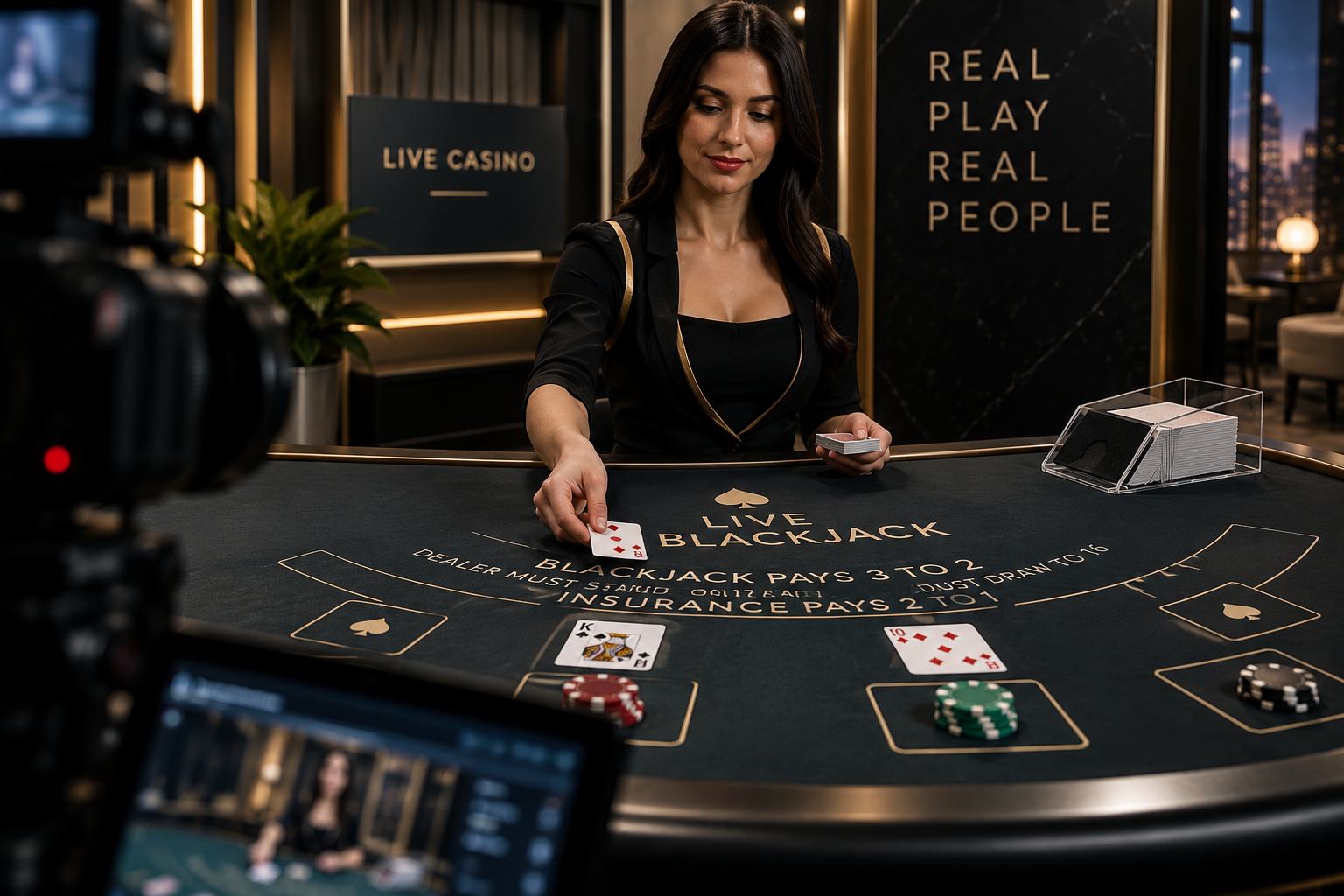
A blackjack table used to be scenery. In live casino studios, it is now part of the media inventory.
The felt, dealer backdrop, betting interface and camera frame offer operators something conventional advertising cannot easily provide: uninterrupted visibility during play. In Ontario, searches for online blackjack ontario now lead into a market where the presentation of a table can matter almost as much as the game catalogue behind it. The operator is no longer simply distributing a supplier’s feed. In many cases, it is buying a visual property of its own.
When the Table Becomes Advertising Inventory
The economics start with the difference between shared and dedicated tables.
A shared table may appear across several casino sites with few visual changes. It is efficient because the studio cost is spread across multiple operators. A branded table adds proprietary colours, logos or interface elements. A dedicated setup goes further, reserving the table, or sometimes an entire studio configuration, for one operator.
The screen becomes exclusive territory. The operator controls what appears behind the dealer, which marks remain visible on the felt and how closely the table resembles the rest of its casino interface.
Unlike a display ad, that exposure does not depend on a separate impression. It sits inside the product for the duration of the session.
Why Blackjack Offers Valuable Screen Space
Blackjack is particularly suited to this model because the camera rarely has to chase the action.
The dealer remains near the centre. Betting positions follow a fixed layout. Cards occupy predictable areas. Large sections of the felt and background therefore remain visible through repeated hands.
From a design perspective, that stability is valuable. A logo placed in the wrong area of a roulette or game-show format may compete with spinning wheels, animations or other moving elements. Blackjack gives designers a comparatively controlled frame.
There is also repetition. A player may see the same mark across dozens of hands without encountering a separate advertisement. That does not automatically translate into loyalty, but it gives the brand far more opportunities to be noticed than a short promotional placement outside the game.
Poor execution can undermine that advantage. Oversized logos, excessive colour blocks or too many sponsor marks make a table harder to read. The most useful space is not necessarily the largest available area, but the position that remains visible without interfering with gameplay.
Dedicated Tables Carry a Different Cost Structure
A dedicated live table is not simply a decorative upgrade. It requires production capacity, dealer staffing, technical integration and reserved studio resources.
That is why operators generally need enough player volume to justify the expense. Shared tables spread operating costs. Dedicated tables concentrate them, but offer exclusivity in return.
The relevant question is therefore not whether customized tables look better. It is whether the additional cost produces enough value through traffic, repeat use or differentiation to warrant maintaining the setup.
A smaller operator may gain little from an expensive private studio if its tables rarely fill. A larger one may see value in giving frequent players a recognizable setting that is unavailable elsewhere.
Sports Rights Are Moving Closer to the Game
The same logic is beginning to influence sports sponsorship.
Historically, gambling partnerships were most visible through stadium signage, broadcast placements and digital advertising. Live casino interfaces create another place where those rights can be expressed.
ToonieBet illustrates the broader approach in Ontario. The company, launched in 2024 and regulated in the province, has combined its online casino presence with Canadian sports partnerships that include football-related naming rights and venue activations. Those agreements create opportunities for the same visual identity to appear across sport, advertising and digital gaming rather than treating each channel separately.
The important development is not any single sponsorship. It is the merging of media rights and product design.
Measuring Whether a Branded Table Works
Visual exposure alone does not establish commercial value.
Operators can compare repeat visits, average session duration, table occupancy and movement between shared and dedicated games. Brand-recall studies can add another layer, particularly where several versions of the same game are available.
Attribution remains difficult. A dedicated table may perform better because of higher limits, dealer selection, interface quality or the players directed toward it. Treating every improvement as evidence that the logo worked would overstate the case.
A meaningful comparison requires similar table conditions and enough time to separate design effects from other variables.
The Felt Is Only Part of the Asset
The commercial space now extends well beyond the centre of the table. Background panels, dealer presentation, betting controls and screen graphics can all carry coordinated visual cues.
Taken together, they turn the live blackjack feed into something closer to a proprietary broadcast than a generic casino stream.
That makes restraint important. The most effective table does not look like an advertisement wrapped around a card game. It keeps the operator visible without making the branding the dominant feature.
Online gambling in Ontario is restricted to those of legal gambling age in their province. Gambling should be treated as entertainment rather than a way to make money, and players should set time and spending limits where appropriate. Support is available through ConnexOntario and provincial self-exclusion services for anyone who finds it difficult to keep play within those limits.